Friday, 17 February 2012

Birds hard to find today

We awoke to a bright sunny day with less wind.  Optimism was rife that we would see more birds.  Our plan was to join Stuart Gregory and check out the local Bonelli's Eagle nesting site.  Well despite the excellent conditions no luck.  The nest was full of Jackdaws stealing sticks.  We will try gain later.  A Black Kite appeared overhead on our way home.


Blue Rock Thrush

In the afternoon a walk around Minerve only produced a male Blue Rock Thrush.  There was a distinct absence of Blackcaps, Chiffchaffs or Firecrests which are usually regular here in winter.  Checking local garrigue I stumbled across 100 Fieldfares and 20 Redwings looking cold and hungry.

Thursday, 16 February 2012

Birds at Last

The temperature reached the dizzy heights of 10 degrees today and we ventured out.  We visited the Gruissan area in brilliant sunshine but a fierce northerly wind.  As we expected there were very few Greater Flamingos about.  Less than 20 all day when we would have normally come across a few hundred at this time of the year.  Those we did find were looking weak and were very approachable.


Adult Greater Flamingo fighting to stay upright just a metre from the road


A tame juvenile Greater Flamingo managing to feed
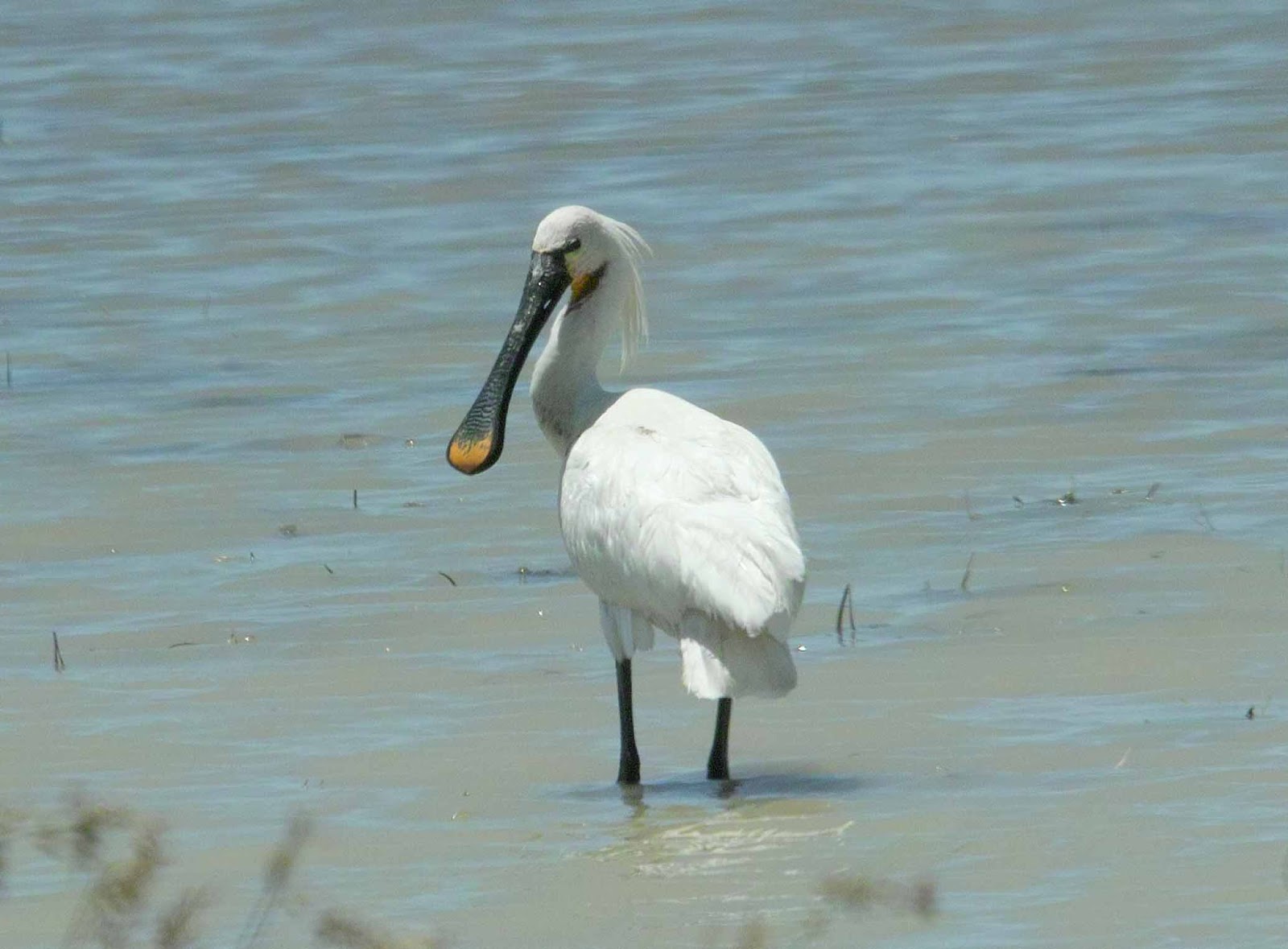
 We began in earnest at Mandirac where there were lots of Little Egrets and 3 Great White Egrets sheltering from the wind.  Twelve Avocets look uneasy huddled out in open water and a lone Spoonbill was fast asleep on a small island.  Three Marsh Harriers quartered the marsh repeatedly flushing large groups of Teal.


Spoonbill

We then checked out Le Petit Tournabelle where a ringtail Hen Harrier crossed the road and 3 Water Pipits fed on floating vegetation.  As we made our way towards the Roc 5 White Storks headed north.  We looked at our favourite wet meadow complex but they were completely dried out and in need of rain.  A Sparrowhawk hurtled past and was spectacularly intercepted by a Merlin and they flew off south.  Another Spoonbill was found in a reed filled ditch but this time busily feeding.


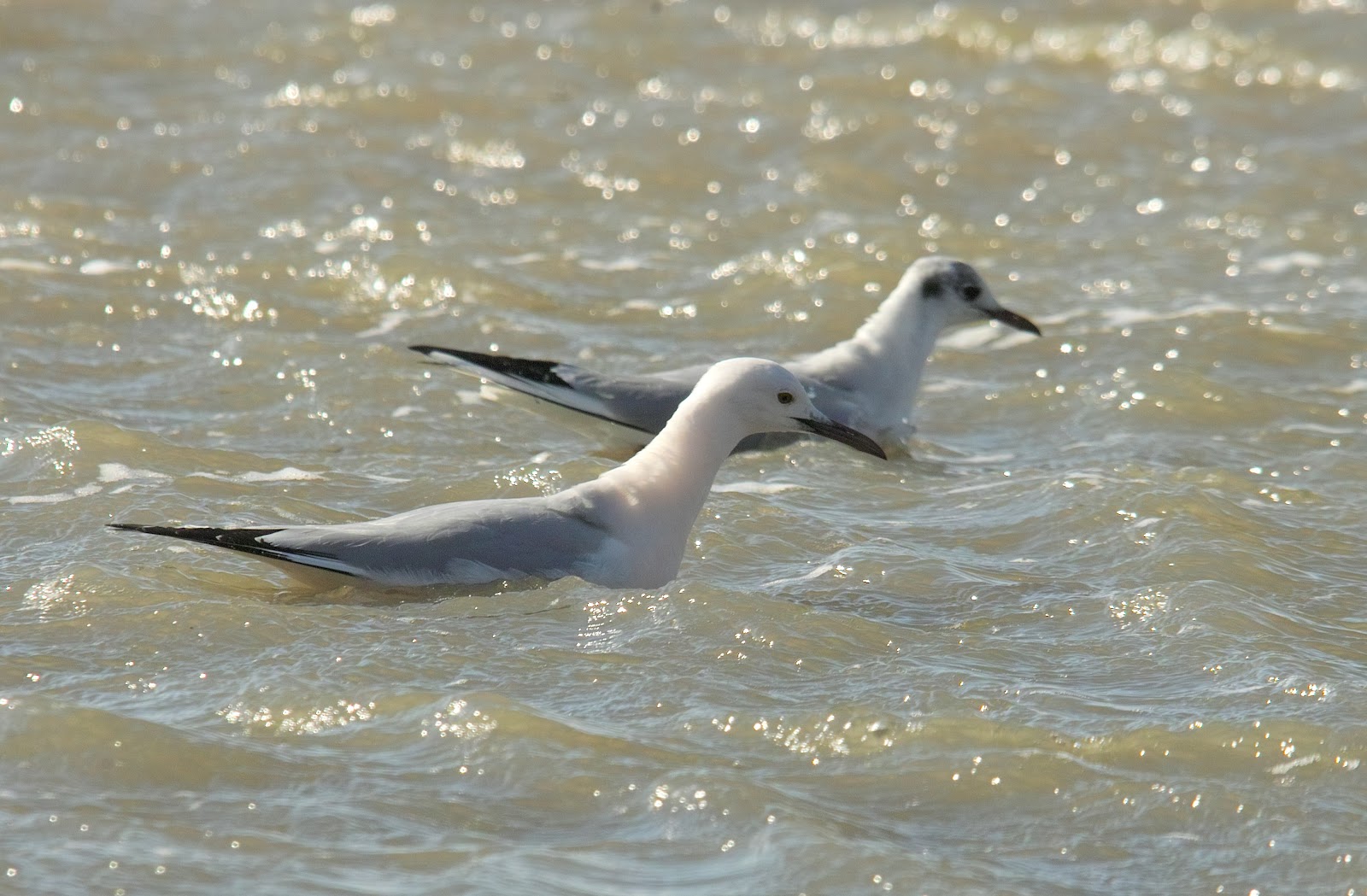
One of two Slender-billed Gulls feeding with Black-headed Gulls
 We headed down to the saltpans at Gruissan where a few more very tame Greater Flamingos were trying to feed.  Right on the edge of the open water 2 superb Slender-billed Gulls were busy feeding with some Black-headed Gulls.


Black Kite

Heading home we stopped to watch our first 2 Black Kites of the year battling north against the wind.

Wednesday, 15 February 2012

Desperate for Birds

Spent the morning staring through the window at sleet showers accompanied by gale force winds.  Even my bird feeders are deserted.  The weather abated after lunch so we went out.  First to Lac de Jouarres which as I expected was largely frozen.  About 20% was free of ice and 3 Pochards, 2 Yellow-legged Gulls, 5 Great Crested Grebes and 3 Cormorants were desperately searching for food.


Fieldfare - there many in Languedoc this winter
 We had a quick look in the hills beyond Minerve but only found flocks of Fieldfares and a wonderful pair of Hen Harriers.

Tuesday, 14 February 2012

Still Very Cold for France

Awoke to bright sunshine and freezing wind.  My brain must have been disfunctional yesterday because I forgot to mention a White Stork battling north against the wind.


White Stork

Birds hard to find in this cold but I noticed one or two Sardinian Warblers scuttling like mice in the low vegetation.  It is not often we see winter thrushes in this part of France but came across quite a few Fieldfares with smaller numbers of Redwings looking hungry in the vineyards.  A small group of 3 Woodlarks flew up at one point and a single Black Redstart was on a wall in a nearby village.


Black Redstart

One or two Buzzards were obvious on a drive to get shopping and later a Sparrowhawk dashed across the road looking for unsuspecting passerines. 


Greater Flamingos

I am hearing disturbing stories of at least 50 Greater Flamingos being found dead in ice at Gruissan. Many more have been taken into care and removed to the Carmargue.  It is not surprising having seen my neighbour's swimming pool covered in 4 inches of ice.

Monday, 13 February 2012

La France

Arrived in France at 3pm their time.  Bright sunshine but absolutely freezing with a bitter wind from the north. Welsh Rugby International James Hook was on the plane with his family so we were all able to congratulate him on the great result on Sunday.  Hook now plays for Perpignan.


Red Kite

Driving to our place the first bird of note was amazingly a Red Kite moving over the Canal de Midi.  A couple of Buzzards were the only other birds noted on the journey.  At home just 2 Robins and a Song Thrush made an appearance before dark.

Sunday, 12 February 2012

Hopefully warming up.

A little milder here in this part of Wales. A watery sun made an appearance and birds were singing.  the number of Siskins have increased with the males looking very smart now.  Several were singing in trees around the garden in between feeding on the niger seed.


Male Siskin

We are off to our French place tomorrow where it has been much colder.  Our neighbours tell us our hot water tank in the garage is completely frozen up and we have the worry of the diesel having frozen in the Land Rover.  They have suffered as low as minus 16 but it is expected to be 0 degrees by Wednesday so we are optimistic. Siskins will soon be replaced by Serins.

Friday, 10 February 2012

Reflecting on Spanish visitors

The recent records of Glossy Ibises in the UK and in particular Wales have reminded me of conversations last summer with scientists at the Palacio, Coto Donana, Spain.  More of that later.


Glossy Ibis on the nest, Spain

It seems that up to 30 Glossy Ibises may have been in Wales at one time recently.  This includes a flock of 23 reported from Carew, Pembrokeshire flying over the road to roost.  This has reduced to 12 or 13 in recent evenings but the residue have not been found elsewhere.  This the second time that a large flock has occurred in Wales as 25 were in the Burry Port, Carmarthenshire area a couple of years ago.


Spanish Glossy Ibis with white plastic ring.

Many of the the birds seen well are ringed with white plastic rings being very prominent.  A bird at Borth, Ceredigion is so approachable that the ring number has been read and it is no surprise to me that its origin is Spain.  A little over 10 years ago no Glossy Ibises bred in Spain but now the Donana population is over 5,000 pairs and still increasing.  Indeed with my friend Javier Hidalgo we discovered a new colony in an existing heronry in a group of tamarisks last May.


Juvenile Glossy Ibis, Spain

Discussing the fact that many more birds than ever before were reaching the UK the Donana scientists were not surprised.  Indeed although not confirmed then they had received news that two of their ringed birds had been located in Cuba.  That really got me thinking.  What are the origins of the Spanish birds?  Rather than colonising from Eastern Europe could they have arrived from the Americas? Why do they head north in autumn?  Why do they not go south to Africa?


Glossy Ibis in autumn in France
 Whatever just like the increasing records and even nesting of many heron species in recent years  the ibises are a welcome sight.  With colonies now nesting in the Carmargue how long before they colonise Britain?